Residential Electrician Solutions for Overloaded Circuits
Overloaded circuits rarely announce themselves with subtlety. They trip breakers when the microwave and toaster run together. They dim lights when a space heater kicks on. They leave a bedroom outlet warm enough to make a homeowner pause and touch it twice. By the time most people call for help, they are not asking abstract questions about electrical capacity. They are trying to use their home normally without the power dropping out.
That is where a skilled Residential Electrician earns trust quickly. Overloaded circuits are common, but they are not trivial. The cause may be as simple as too many appliances sharing one branch circuit, or as layered as an aging panel, poorly planned additions, changed code expectations, and years of small homeowner workarounds. The right fix depends on understanding load, circuit design, conductor sizing, breaker behavior, and how people actually live in the house.
A lot has changed in the average home over the last twenty years. Kitchens carry more countertop appliances. Bedrooms double as offices. Garages hold refrigerators, freezers, chargers, and shop tools. Bathrooms have hair dryers, heated mirrors, and bidet seats. Outdoor living spaces add lighting, entertainment equipment, and sometimes infrared heaters. Many houses were never laid out with that demand in mind. The wiring may still be serviceable, but the way power is distributed inside the house no longer matches the load.
What an overloaded circuit really is
An overloaded circuit is a branch circuit carrying more current than it was designed to handle for the way it is being used. That sounds straightforward, but in practice there are nuances. A 15-amp general lighting circuit in a 1970s home may have worked fine when it powered a few lamps and a television. Today, the same circuit might serve a gaming computer, dual monitors, a laser printer, a portable AC unit, and chargers scattered across every receptacle. Nothing is necessarily broken. The load simply outgrew the circuit.
Breakers exist to protect the wiring, not the appliance and not the homeowner’s convenience. If a breaker trips repeatedly, it is doing its job. The problem is upstream of the annoyance. Either the connected load is too high, the circuit has a fault, the breaker is weak, or the wiring arrangement no longer fits the space. A professional Residential Electrician distinguishes among those possibilities before recommending repairs.
That distinction matters because people often misread the symptoms. Flickering lights do not always mean overload. Warm plugs do not always mean a bad appliance. A tripping breaker is not always “just sensitive.” I have seen homeowners replace a nuisance-tripping breaker only to discover the real problem was a window AC unit, a vacuum, and two rooms of receptacles all sharing one tired 15-amp run. I have also seen the opposite, where a breaker was blamed for months when the actual issue was a loose neutral causing voltage irregularities and heat.
The signs homeowners should take seriously
Some symptoms point to inconvenience. Others point to risk. The challenge is that they can look similar at first.
Here are the warning signs that usually justify a closer electrical evaluation:
- Breakers trip repeatedly when the same combination of appliances is used
- Lights dim or flicker when a high-draw device starts up
- Receptacles, switches, or plugs feel noticeably warm during normal use
- Extension cords and power strips have become a permanent part of the room
- A burning smell or discoloration appears near an outlet or panel
A single tripped breaker after plugging in a new space heater is not unusual. A breaker that trips every week in the same room is a message. Warmth is another one. A receptacle should not feel hot. A little warmth from a transformer-style charger is normal, but heat at the faceplate, plug blades, or cord cap suggests resistance, poor contact, or excess current. Those are not conditions to watch casually for six months.
One common story goes like this: the homeowner notices the upstairs breaker trips only in winter. Nothing seems wrong in summer, so the issue gets ignored. What changed was not the wiring. It was the load pattern. Space heaters, heated blankets, and closed-window living push a marginal circuit over the edge. The fix might be as modest as adding a dedicated circuit to the coldest bedroom, or as involved as rebalancing several branch circuits and replacing worn devices at the same time.
Why overloaded circuits show up in otherwise decent homes
Most overloaded circuits are not the result of one dramatic mistake. They develop gradually. A house is built for one use, then the family changes and the rooms do too. A dining room becomes a remote office. A garage becomes a gym. A spare bedroom becomes a nursery with a humidifier, sound machine, heater, and monitor equipment. No single addition seems significant. The circuit sees the total.
Older homes are especially prone to this because electrical design used to assume lighter plug loads. Even well-built houses from the 1960s through the 1990s often have fewer small-appliance circuits, fewer bathroom circuits, and less specialization overall than a modern code-compliant installation. Kitchen and laundry demands alone have increased substantially. Once you add modern lifestyle habits, the original wiring plan starts feeling stretched.
Renovations can create problems too. I have walked into homes where a finished basement looked excellent cosmetically but borrowed power from an already busy main-floor receptacle circuit. The basement itself was not “bad work” in the visible sense. The issue was hidden in the planning. A treadmill, dehumidifier, television, and mini fridge were all operating on a circuit that previously handled a lamp and occasional vacuum cleaner upstairs. It lasted until summer humidity pushed the dehumidifier into longer run cycles.
Sometimes the source is not load volume but load type. Motor-driven devices, heating elements, and compressors draw more current than many people realize. Portable heaters are notorious. A typical space heater can consume around 1,500 watts, which is a major share of a 15-amp circuit. Hair dryers, toaster ovens, countertop griddles, and vacuum cleaners live in a similar neighborhood. Stack two or three of those on one circuit and breaker trips become predictable.
How a Residential Electrician diagnoses the problem
The best troubleshooting begins with questions, not tools. Which breaker trips? At what time of day? What changed recently? Does it happen only in one season? Are there extension cords involved? Did someone replace outlets or light fixtures? These details narrow the field quickly.
From there, a Residential Electrician typically identifies everything served by the circuit, then verifies the breaker size, wire gauge, receptacle condition, and panel labeling. This sounds basic, but panel directories are often inaccurate. In many homes, one “bedroom” breaker quietly feeds a hall, a bathroom receptacle added years later, and an outdoor outlet no one remembers exists. Mapping the circuit is often the turning point between guesswork and a proper fix.
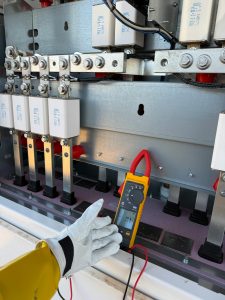
Load measurement can help when the problem is intermittent or disputed. Clamp meters and practical load testing reveal whether the breaker is tripping at expected values or behaving abnormally. If a breaker trips below its expected threshold under ordinary conditions, replacement may be warranted. If the current draw is clearly excessive, the fix moves toward redistribution, new dedicated circuits, or service upgrades depending on the bigger picture.
Inspection also looks for hidden resistance points. Loose terminations, backstabbed receptacles, worn devices, and damaged conductors generate heat that can mimic overload symptoms or make a borderline circuit fail sooner. In one kitchen call, the homeowners were certain they needed a bigger breaker because coffee and breakfast prep kept tripping power. The real issue was a loose connection on a receptacle feeding several downstream outlets. Repairing that defect, then shifting one appliance to a properly located small-appliance circuit, solved the immediate problem without enlarging anything that should not have been enlarged.
That last point matters. Increasing breaker size is almost never the answer unless the entire circuit, wire gauge, and device ratings support it, and the original design truly called for it. Swapping a 15-amp breaker for a 20-amp breaker on 14-gauge wire is not a shortcut. It is a hazard.
Practical solutions that actually work
There is no single fix for overloaded circuits because the homes, loads, and budgets differ. Still, most effective repairs fall into a few broad categories. The right Residential Electrician will match the remedy to the cause rather than sell the largest project in sight.
The most common solutions include:
- Redistributing existing loads across circuits that have spare capacity
- Installing one or more dedicated circuits for high-draw appliances or rooms with concentrated demand
- Replacing worn breakers, receptacles, or terminations that are contributing to heat and nuisance trips
- Upgrading the electrical panel when circuit space, age, or capacity has become a limiting factor
- Planning targeted rewiring in remodeled areas where old circuit layouts no longer fit current use
Redistribution is often the least invasive fix. If one circuit is overloaded and another nearby is lightly used, moving selected receptacles or lighting loads can restore balance. This works well in homes where usage patterns changed but the panel still has reasonable capacity. It does require careful tracing and clean workmanship. Randomly moving wires in the panel without understanding shared neutrals, AFCI or GFCI requirements, and room usage can create new problems.
Dedicated circuits are the workhorse solution for recurring overloads. Home offices, garages, laundry areas, kitchen workstations, media rooms, and primary bedrooms with heaters or window AC units often benefit from them. A dedicated circuit gives a high-draw or high-use area its own protected path back to the panel. It reduces nuisance tripping, cuts dependence on extension cords, and usually improves safety and convenience at the same time.
Panel upgrades enter the conversation when the issue is bigger than one branch circuit. Some homes have panels that are physically full, use obsolete equipment, or lack enough capacity for current and planned loads. If the homeowner is adding an EV charger, heat pump, induction range, or finished addition, it may make more sense to solve the overloaded-circuit complaint inside a broader upgrade strategy. Done well, that prevents paying twice for overlapping work.
Targeted rewiring makes sense when the existing circuit layout is fundamentally outdated. I have seen houses where one side of the second floor was tied together in a way that made sense fifty years ago but not now. Trying to patch around that forever is expensive in the long run. A focused rewire of the affected rooms, especially during renovation or wall access, can be cleaner and more cost-effective than years of piecemeal fixes.
Room-by-room realities that shape the fix
Kitchens create some of the most obvious overload complaints because the appliances are visible and their wattage is substantial. Toasters, coffee makers, air fryers, microwaves, and electric kettles all pull meaningful current. Even if the kitchen was built to code at the time, modern appliance habits can produce overlap that earlier designs did not anticipate. In these spaces, dedicated small-appliance circuits and clear separation of countertop receptacles are often the answer.
Bathrooms generate short, intense loads. Hair dryers and styling tools can push a marginal circuit hard, especially if lighting, exhaust fans, and adjacent receptacles share the same run. A homeowner may only notice the problem during rushed weekday mornings, which leads them to believe it is random. It is not random. It is a timing pattern.
Bedrooms and home offices create a different challenge because the load seems harmless in pieces. Chargers, monitors, printers, desk heaters, sound systems, and lamps do not feel industrial. Together they can keep a circuit near its comfort limit for long periods. The risk grows when power strips become permanent furniture. A power strip is not a capacity upgrade. It is only a way to share one receptacle, and it can hide how much is being asked of the branch circuit.
Garages and basements often suffer from “temporary” electrical setups that become permanent. Chest freezers, dehumidifiers, battery chargers, and tools run for years on a circuit that was never meant to support them all. Because those spaces are somewhat removed from the main living area, warning signs get overlooked. By the time the breaker trips often enough to force action, there may already be wear at the receptacles from repeated heavy use.
When the issue points beyond the branch circuit
Sometimes what looks like an overloaded circuit is really a bigger service or equipment limitation. Voltage drop under load, panel heat, corrosion, breaker instability, and insufficient service capacity can complicate the picture. A house with a 100-amp service may still function well for some families, but if major electric appliances have been added over time, the margin can disappear.
This is where good judgment matters. Not every home needs a full service upgrade. Some need better branch-circuit design. Others absolutely benefit from moving to 150-amp or 200-amp service, especially if future electrification is on the horizon. A careful Residential Electrician will explain what problem each upgrade solves. Homeowners should be wary of any recommendation that jumps immediately to “replace everything” without a clear link between symptoms and findings.
There is also the issue of legacy panels and aging https://ziongsou976.hexaforgey.com/posts/how-residential-electrician-repairs-can-lower-long-term-costs breakers. Some older equipment develops reliability problems that confuse diagnosis. Breakers may trip inconsistently, bus connections may deteriorate, and replacement parts may be hard to source. In those cases, repair decisions should account for both current safety and the practicality of maintaining obsolete hardware. The cheapest short-term fix is not always the soundest professional recommendation.
What homeowners can do before the electrician arrives
There are a few useful observations homeowners can make safely, and they often speed up diagnosis. Identify which breaker is tripping and note the label, even if you suspect the label is wrong. Pay attention to what was running at the time. Notice whether the issue occurs only with heating or cooling equipment, only in one room, or only during certain times of day. If an outlet or switch smells burnt or feels hot, stop using it immediately.
Avoid the temptation to “test” the problem repeatedly. Repeatedly resetting a breaker and forcing the same overload is not harmless troubleshooting. It stresses the components and can worsen hidden damage. Likewise, do not replace a breaker with a larger one or swap receptacles based on online tutorials unless you truly understand the circuit and local code requirements.
A clear description such as, “The breaker marked front bedrooms trips when the vacuum and space heater run together, and the office lights dim when that heater turns on,” gives a Residential Electrician far more to work with than, “The upstairs power is weird sometimes.” Specifics matter.
Cost, disruption, and how to think about value
Homeowners usually ask two questions after diagnosis: how much, and how disruptive? The answer depends on access, panel condition, local labor rates, permit requirements, and how extensive the correction needs to be. Replacing a weak breaker or a few damaged receptacles is a very different job from running dedicated circuits through finished walls or upgrading a panel.
What tends to deliver the best value is work that solves both the immediate complaint and the underlying weakness. If a circuit is overloaded because a room changed function, installing a dedicated circuit is often better value than repeatedly replacing scorched power strips or living with nuisance trips. If a panel is full and several rooms need rebalancing, a thoughtful panel upgrade may cost more upfront but prevent a cascade of compromises later.
There is also value in timing. If walls are already open during remodeling, adding circuits is much easier and less expensive than doing it after everything is patched and painted. Good electricians think ahead. If the homeowner mentions plans for a workshop, hot tub, or EV charger next year, that should shape today’s recommendations.
The difference between a patch and a durable repair
A patch restores power. A durable repair restores confidence. That usually means the circuit can support real use without heat, nuisance trips, or a web of adapters and extension cords. It means the panel is labeled accurately, the wiring matches the protection, and the homeowner knows which outlets are intended for heavier loads.
The durable repair is not always the biggest project. Sometimes it is one dedicated 20-amp circuit to the exact room that needs it. Sometimes it is correcting poor connections on a multi-device run. Sometimes it is redistributing loads that should never have been grouped together. What makes it durable is that the electrical design once again matches the household behavior.
That alignment is the heart of overloaded-circuit work. Electricity is predictable. People are less so. A good Residential Electrician understands both. The code book matters, the measurements matter, and the lived pattern of the home matters just as much. When those are considered together, the right solution becomes far easier to see, and the result is a house that works the way it should, quietly, safely, and without the breaker panel becoming part of the daily routine.
Paxos Electric Company, LLC
255 NJ-15, Wharton, NJ 07885, United States
+1 973-598-8543
FAQ About Residential Electrician
What does a residential electrician do?
A residential electrician installs, inspects, maintains, and repairs electrical systems in homes. Common services include troubleshooting circuits, replacing panels, adding outlets and lighting, and completing electrical work for renovations.
When should I call an electrician for my home?
Call a licensed electrician if you notice repeated breaker trips, flickering lights, buzzing, burning odors, warm outlets, sparks, or unexplained power loss. Urgent warning signs should be addressed promptly.
Can a residential electrician upgrade an electrical panel?
Yes. A qualified electrician can evaluate the existing service, determine whether an upgrade is appropriate, obtain required permits, and install a panel sized for the home and planned electrical loads.
Do I need an electrician to install an EV charger?
A home EV charger often needs a dedicated circuit and a review of panel capacity. A licensed electrician can confirm the manufacturer requirements and complete the installation according to local electrical codes.